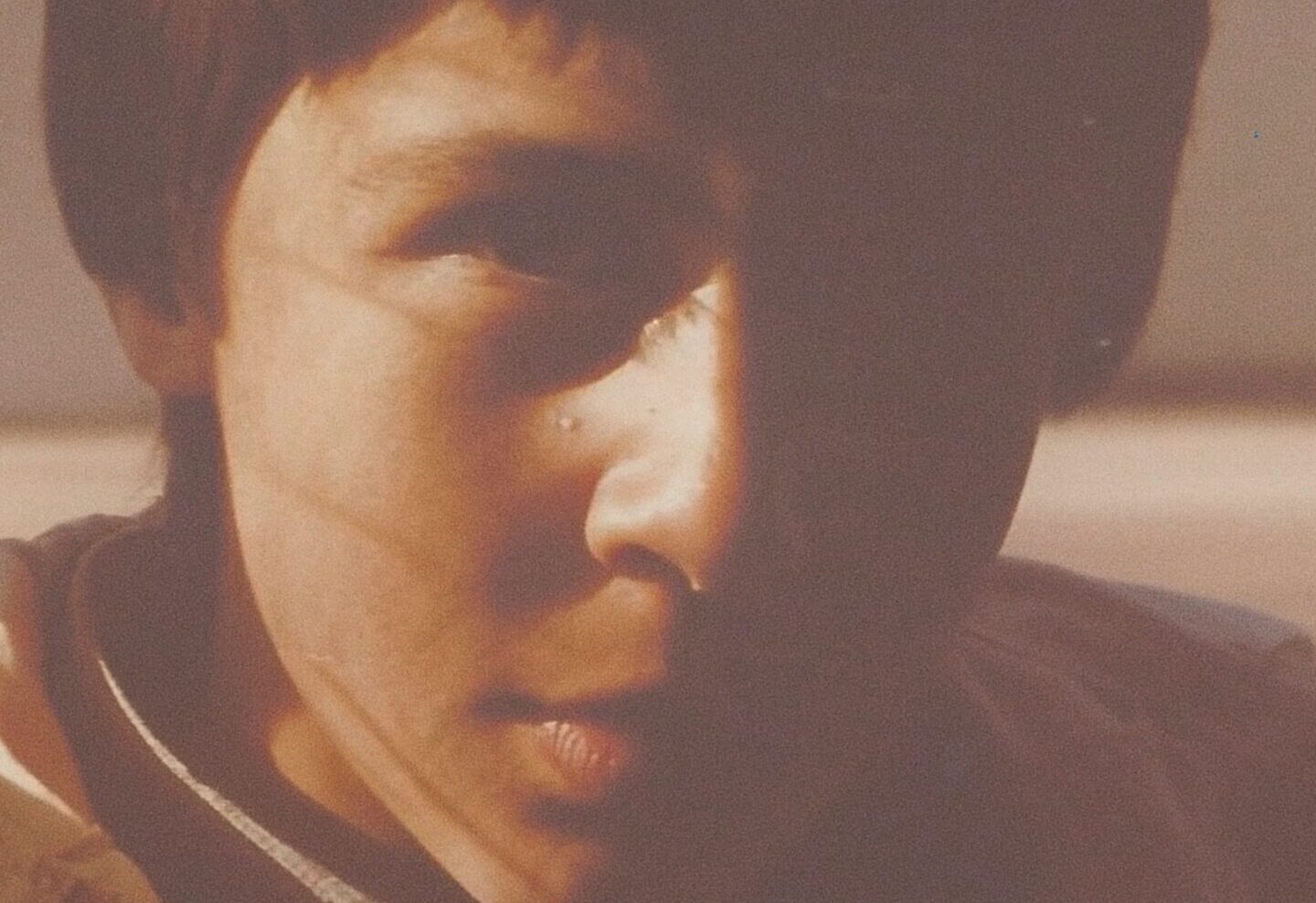
A family taboo, a missing story. Michele, an uncle never met, was lost to AIDS and the heroin epidemic that scarred Italy in the 1980s and 1990s. Only twenty-five photographs remain. His nephew tries to piece him back together, guided by two opposing voices: his mother’s memories and the artificial gaze of the Google Vision API, hoping that from their contrast something true might surface.
Threaded through an online call between mother and son, the film asks how we remember what was never spoken, questioning the value of photography, its fragile link to memory, and the tension between a mother’s warmth and an algorithm’s cold precision.
Country
ItalyYear
2026Length
18'
Category
Documentary/experimentalScreenplay
Paolo BaigueraSound
Marco Falloni, Marta BillingsleyProduction
Il Varco Cinema, Ring Film, 5e6 Producers, Andrea Gatopoulos, Tommaso Bertani, Graziano ChiscuzzuDistribution
Gargantua Film DistributionSynopsis
Biography
Paolo Baiguera (b. 1998) is a director and filmmaker. He has worked on a range of productions with companies including Sky, Rai, Kon-Tiki Film, Indigo Film, ANG Film, and Ring Film. Since 2023, he has been collaborating with Alessio Rigo de Righi and Matteo Zoppis on the feature Testa o Croce? (Heads or Tails?), selected for the Un Certain Regard section at the Cannes Film Festival. His debut short film El Pütì Pèrs (The Lost Child) premiered at the 2025 Venice International Film Critics’ Week where it received a special mention.
Statement
This film begins with a family taboo: Michele, the uncle I never met, who died of AIDS at 28. Developed during the “Nouvelle Bug Vol. 4” workshop, the short became a way to confront both a personal wound and my uncle’s heroin addiction and eventual loss. A story that scarred my family and echoes the experience of a generation in Italy.
To do so, I placed two voices in dialogue: my mother’s recollection and the automated language of an AI. These two perspectives are often in tension, sometimes overlapping, and through their contrast, Michele’s story gradually emerges. In this fragile reconstruction, remembering and analyzing his photographs becomes more than an archival exercise—it becomes a gesture of understanding and healing, a way to trace the human life behind the images and to reflect on memory, loss, and what remains unspoken.
— Paolo Baiguera
Archival materials
Author’s personal family archive.


