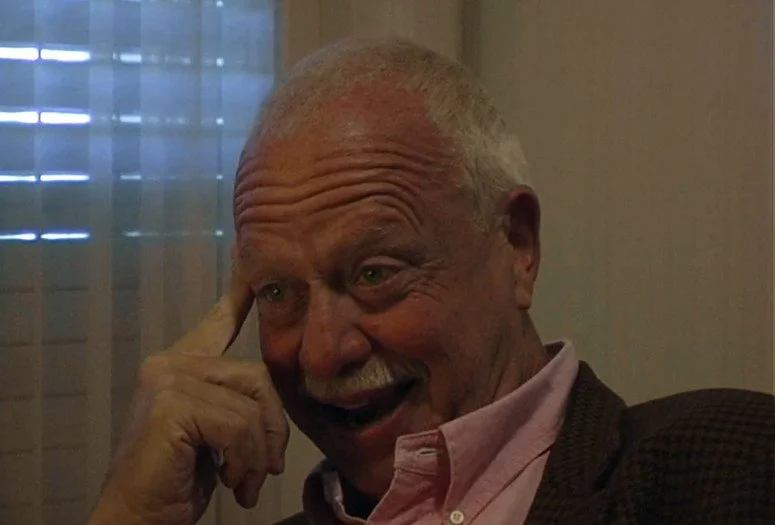
Blending personal footage filmed over three decades by the Uruguayan director Federico Veiroj, fragments from his own fiction films, and the recording of a psychiatric case conference in which his father is evaluated for a diagnosis, this offbeat and playfully introspective nonfiction feature explores a fraught family history, a complex father-son relationship, and the wild story of rise and fall—set within a traditional household in Montevideo.
Country
Uruguay, ArgentinaYear
2025Length
70'
Category
DocumentaryPremiere
Italian
Screenplay
Federico VeirojCinematography
Bárbara Álvarez, Federico VeirojEditing
Manuel RillaMusic
Mariana IngoldSound
Álvaro Rivero, Daniel YafaliánProduction
Alina Kaplan, Federico VeirojDistribution
CINEKDOQUESynopsis
Biography
Federico Veiroj (born in 1976 in Montevideo) is a Uruguayan-Spanish screenwriter, producer, and director. He produced (through his company CINEKDOQUE), wrote, and directed his first film, Acne, in 2008, while his second feature film, A Useful Life, in 2010, screened at the Toronto International Film Festival and received more than 20 awards worldwide, in addition to being Uruguay’s official Oscar submission.
In 2023, he directed the TV series La banda for VIX / DYNAMO PRODUCTIONS, his first television project in Mexico.
Statement
I always filmed as a way of remembering, of preserving something that might one day be given meaning. It was—and still is—fun to film, to know that I am keeping something, preserving emotions, and that I have the power to feel them again. That is how I built an archive of experiences, encounters, and recordings of family members, and above all of one person who has marked me in many different ways throughout my life: my father. I filmed him whenever I could, trying to understand him, to unravel what lay behind him. I identified with him, hated him, and loved him, as much as I did myself. And he identified with me; he saw a physical and emotional resemblance between us. He always made that clear to me. That is why he let me film him and never even asked me, “What for?”.
I think he felt that he could be a character worthy of being filmed. And even when he was unaware that a camera was there—I filmed him secretly quite often—there was always, underneath it all, a kind of behavior that belonged to a character: unusual, daring, irreverent, inappropriate, wild, charming, well-timed, and a great manipulator. My father was not only the great character in my personal archive; he was also a major source of inspiration for my fictional films. And whenever he saw himself represented in my films, he enjoyed it more than anyone else. Ultimately, he had been my first character.
[…] A few years ago, a bell went off in my head telling me that I needed to venture into the jungle of my archive, perhaps under the pretext of understanding more about my adult life, my life as a father, and my life as a filmmaker.
— Federico Veiroj
Archival materials
Personal & domestic video and film archive plus feature films from the director.
Extra


